Pitra Puja Mantra Jaap
Pitra Puja is a sacred Hindu ritual dedicated to honoring, remembering, and expressing gratitude to one's departed ancestors (Pitras). It is performed to seek their blessings, ensure their peaceful journey in the afterlife, and resolve any ancestral karmic debts (Pitra Dosha).
In Hindu philosophy, the bonds of family extend far beyond the physical lifetime. It is believed that after leaving the mortal body, souls reside in a realm called Pitra Loka before their next reincarnation. During this time, they rely on the spiritual sustenance provided by their living descendants through specific rituals.
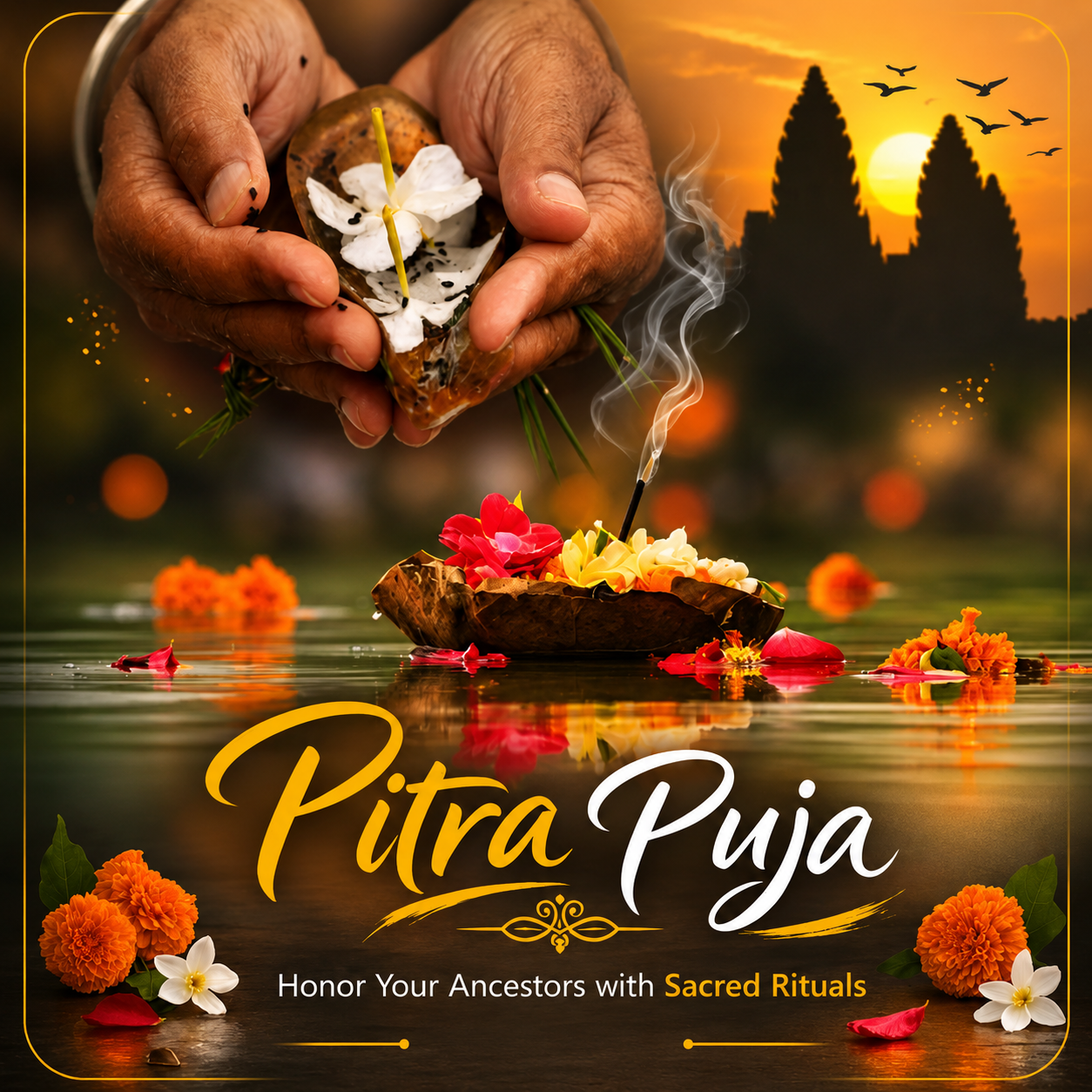
Pitra Puja is typically performed during Pitru Paksha (a 16-day lunar period in the Hindu calendar dedicated to ancestors, usually falling in September–October), on Amavasya (new moon days), or on the specific death anniversary (Tithi) of the deceased. The image highlights a ritual involving Tarpan (offering water mixed with black sesame seeds) and floating leaf cups (donas) with flowers and incense in sacred water bodies, symbolizing the transition of offerings to the spiritual realm.
Removal of Pitra Dosha: It alleviates astrological afflictions or obstacles caused by the unresolved karmas or desires of ancestors.
Family Harmony & Prosperity: Wins the blessings of ancestors, which brings peace, financial stability, and growth to the household.
Clearance of Obstacles: Helps resolve lingering life issues, such as delays in marriage, career stagnation, or difficulties in conceiving.
Spiritual Liberation: Assists the departed souls in breaking free from worldly attachments, helping them progress toward Moksha (liberation).
Good Health & Longevity: Protects family members from unexpected health crises and ensures overall well-being.
Purification and Preparation
The person performing the ritual (usually the eldest son or a male family member) takes a holy bath and wears clean, traditional attire (often a dhoti).
The ritual area is cleaned, and a sacred space is set up facing the South direction, which is traditionally associated with ancestors and Lord Yama.
2. Sankalpa (Sacred Resolve)
The practitioner takes water, rice, and flowers in their hand and makes a formal vow (Sankalpa), stating their name, lineage (Gotra), and the intention to honor their ancestors.
3. Tarpan (Offering of Water)
Water mixed with black sesame seeds (Kala Til), milk, and barley is offered.
The water is poured out through the space between the thumb and index finger (known as the Pitri Tirtha) while chanting ancestral mantras.
4. Pinda Daan (Offering Food)
Spherical balls made of cooked rice, barley flour, ghee, and honey—called Pindas—are prepared.
These are offered to the ancestors with specific prayers, symbolizing the nourishment of their subtle bodies.
5. Food Offerings (Bhojan)
A portion of the specially prepared satvik food is offered to sacred channels believed to carry the energy to the ancestors: crows (highly revered in this ritual), cows, and dogs.
Offering food and charity (Daan) to priests or the underprivileged is also a core part of completing the ritual.
No reviews yet. Be the first to review this puja after booking.
Login to write a review.