Pitra Puja
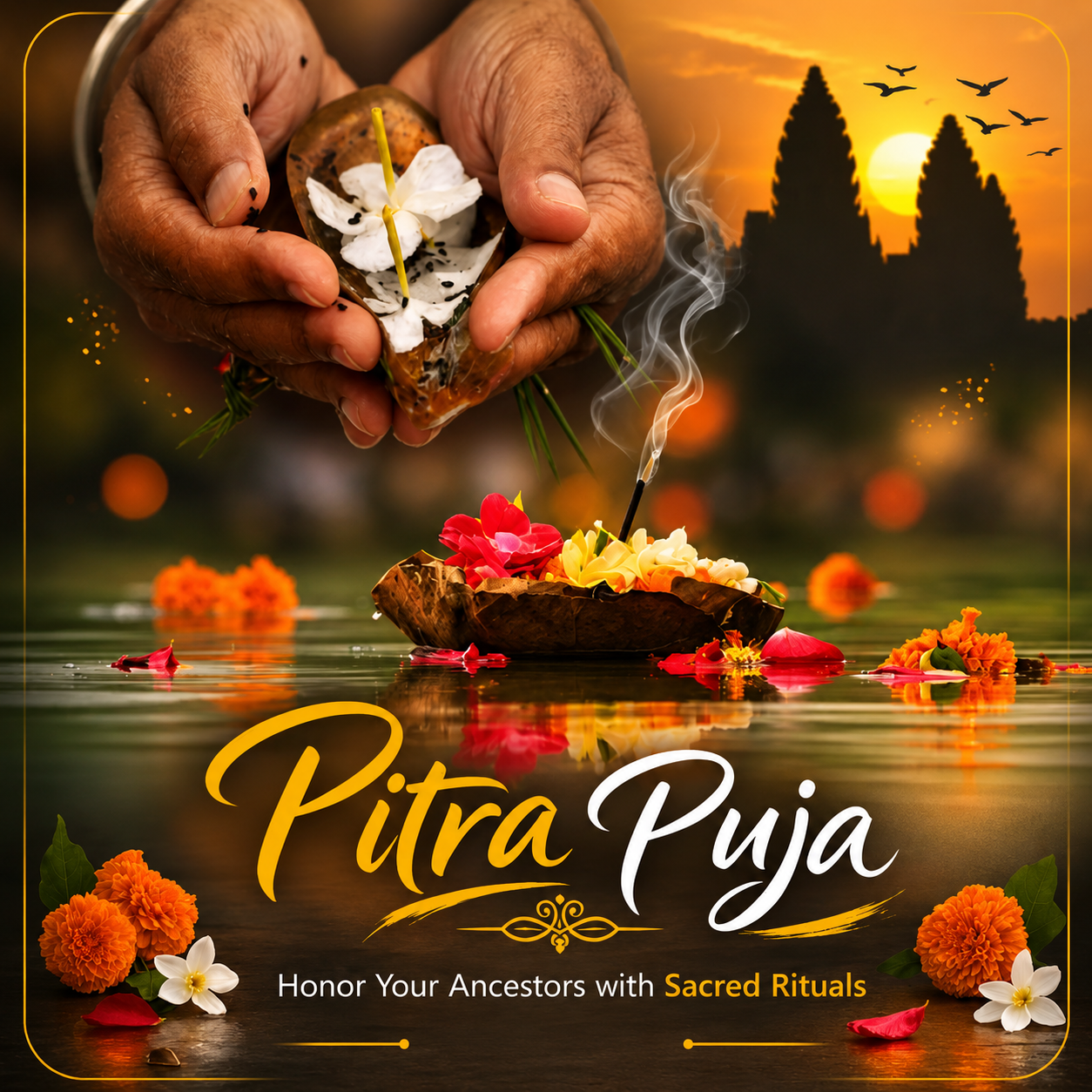
Pitra Puja is a sacred Hindu ritual dedicated entirely to honoring, feeding, and expressing deep gratitude toward one’s ancestors (Pitrus). Performed primarily near sacred water bodies, this ceremony ensures that departed souls find peace, progress seamlessly on their spiritual journey, and bless their living descendants with protection and abundance.
According to Vedic philosophy, when souls pass away, they enter Pitri Loka (the realm of the ancestors) before their next cosmic transition. During this phase, they rely on the spiritual energy, food, and water offered by their living lineages to satisfy their celestial hunger and thirst.
Pitra Puja bridges the gap between the material world and the afterlife. It is a profound act of familial duty (Pitri Rin or ancestral debt). While it can be performed on the specific death anniversary (Tithi) of a loved one, it is most widely practiced during Pitru Paksha (a dedicated 16-day lunar period in the Hindu calendar) or on Amavasya (new moon) days. Failing to honor ancestors is believed to cause Pitri Dosh, which can manifest as persistent life stagnation, domestic disputes, or unexplainable hardships in the family line.
Resolution of Pitri Dosh: Pacifies restless ancestral souls, lifting karmic blockages that stall personal growth, career, and business.
Family Harmony & Continuity: Brings peace to household dynamics, clears obstacles related to marriage, and blesses the lineage with healthy children.
Financial Stability: Removes unexplained financial drains, inviting wealth, stability, and professional prosperity.
Mental Peace and Well-being: Clears heavy, stagnant energies from the home aura, relieving family members of chronic stress or unexplainable health issues.
Soul Liberation: Aids departed ancestors in breaking free from earthbound attachments, allowing them to attain higher spiritual realms or Moksha.
A. Sankalp (Sacred Resolve)
The devotee sits facing the South direction (the direction attributed to the ancestors).
The priest helps the devotee take a Sankalp, mentioning the names, lineages (Gotra), and relationships of the departed ancestors they wish to honor.
B. Tarpan (Offering of Water)
The devotee takes water mixed with black sesame seeds (Til), barley (Jau), raw milk, and white flowers in their hands.
The mixture is slowly poured through the space between the thumb and index finger (known as the Pitri Teertha portion of the hand), accompanied by specific ancestral mantras. This symbolizes quenching the metaphysical thirst of the ancestors.
C. Pinda Daan (Offering of Food)
Smooth balls made of cooked rice, barley flour, ghee, and black sesame seeds are prepared; these are called Pindas.
These Pindas are offered on a bed of sacred Kusha grass. The essence of this food is believed to be psychically received by the ancestors, satisfying their hunger.
D. Brahmin Bhoj & Charity
Offering food, clothes, and financial dakshina to righteous priests (Brahmins) is a vital part of the ritual, as they serve as earthly conduits for the ancestors' satisfaction.
Traditionally, portions of the food are also offered to crows (believed to carry the energy of the ancestors), cows, and dogs.
E. Visarjan (Immersion)
At the conclusion of the ceremony, the offered items and Pindas are respectfully immersed in a flowing river or a sacred water body, allowing the elements to gracefully dissolve and return to nature.
No reviews yet. Be the first to review this puja after booking.
Login to write a review.