Tulshi Vivah
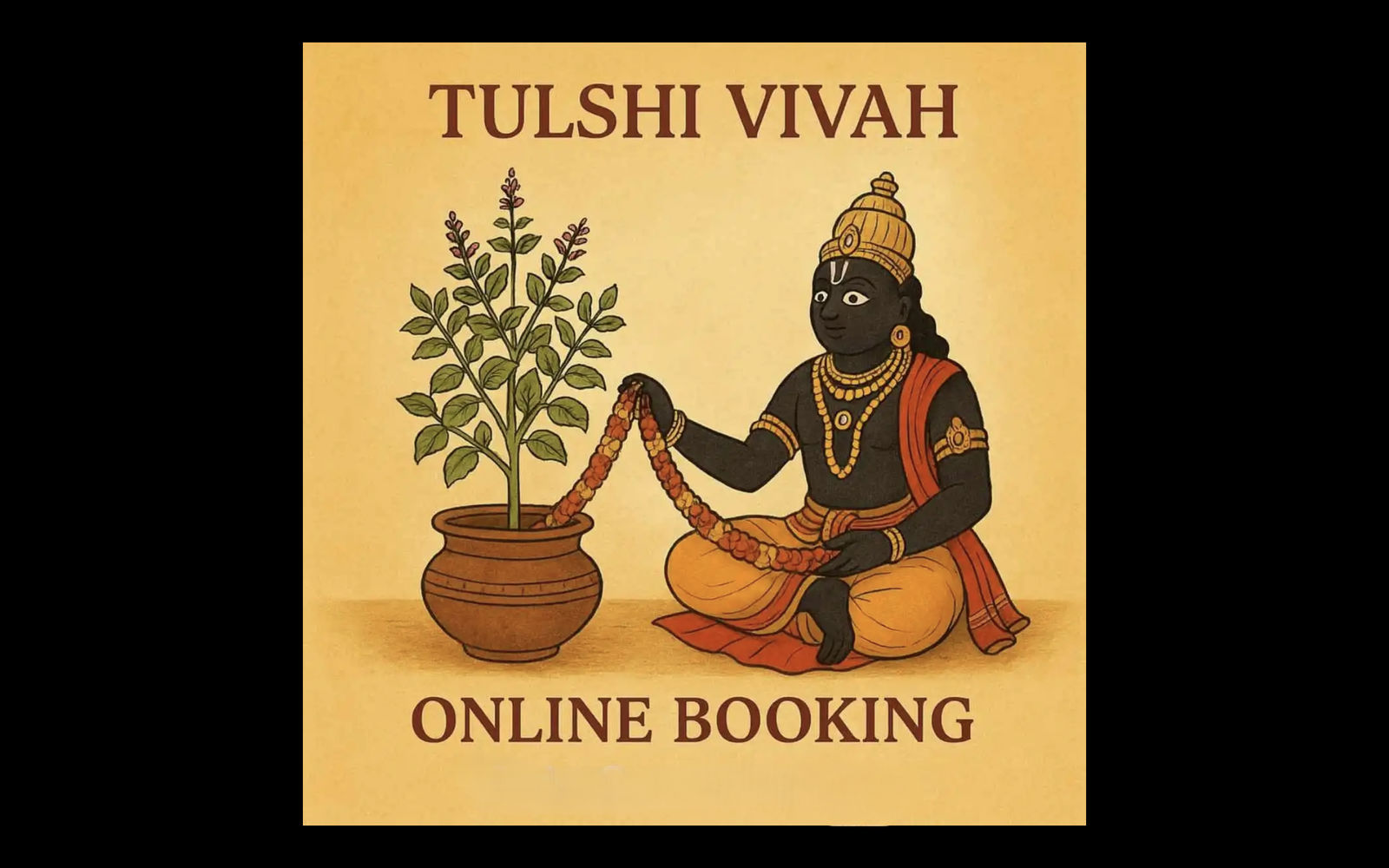
Tulsi Vivah is a sacred Hindu ceremony that symbolizes the divine marriage of Goddess Tulsi (an incarnation of Goddess Lakshmi) with Lord Vishnu in the form of Shaligram or Lord Krishna. Celebrated on the Shukla Ekadashi or Dwadashi of the Kartik month, this auspicious ritual marks the beginning of the Hindu wedding season and brings blessings of marital harmony, prosperity, happiness, and spiritual growth.
Tulsi Vivah is one of the most revered festivals in Hindu tradition, celebrating the ceremonial marriage of the sacred Tulsi plant with Lord Vishnu. According to Hindu scriptures, Goddess Tulsi, also known as Vrinda, was blessed by Lord Vishnu and became His eternal consort. The ritual signifies the union of divine energies and symbolizes purity, devotion, prosperity, and auspicious beginnings.
The ceremony is performed by decorating the Tulsi plant as a bride and placing a Shaligram Shila or idol of Lord Vishnu as the groom. Vedic mantras, wedding rituals, offerings, and prayers are performed by priests or family members to invoke divine blessings.
Tulsi Vivah is especially beneficial for unmarried individuals seeking suitable life partners, married couples praying for a happy and harmonious relationship, and families seeking peace, prosperity, and spiritual well-being. It is also believed to remove past karmic obstacles and bring the blessings of Lord Vishnu and Goddess Lakshmi into the home.
Brings the blessings of Lord Vishnu and Goddess Lakshmi.
Removes obstacles in marriage and relationships.
Helps unmarried individuals find a suitable life partner.
Strengthens love, trust, and harmony between married couples.
Brings peace, happiness, and prosperity to the family.
Removes negative energies and Vastu-related disturbances.
Promotes financial stability and abundance.
Enhances devotion, purity, and spiritual growth.
Reduces the effects of past karmic obstacles.
Invites auspiciousness and positive energy into the home.
Blesses the family with health, happiness, and long-lasting prosperity.
1. Sankalp (Sacred Resolution)
The ceremony begins with a Sankalp, where the devotee states their name, family details, and the purpose of performing Tulsi Vivah.
2. Ganesh Puja
Lord Ganesha is worshipped first to remove obstacles and ensure the successful completion of the ceremony.
3. Decoration of Tulsi and Lord Vishnu
The Tulsi plant is beautifully decorated as a bride with flowers, ornaments, and a traditional cloth. A Shaligram Shila or idol of Lord Vishnu/Krishna is decorated as the groom.
4. Invocation of Deities
Priests invoke Lord Vishnu, Goddess Lakshmi, Goddess Tulsi, and other divine deities through Vedic mantras.
5. Marriage Ceremony
The sacred wedding rituals are performed, including exchanging flower garlands, tying the auspicious thread, chanting Vedic marriage mantras, and offering Akshata (sacred rice).
6. Offerings and Worship
Flowers, fruits, sweets, Panchamrit, Tulsi leaves, incense, lamps, and other sacred offerings are presented to the divine couple
No reviews yet. Be the first to review this puja after booking.
Login to write a review.
Related Puja Services